Creatine for women in Australia: what a pharmacist checks first

Founder of Clean Green Safe
This week, a mum in one of my online groups asked whether creatine is safe, effective and worth the money. Within a day, 33 women had shared their thoughts. Some loved it, some weren’t sure, and a few had been told very different things.
I love that we’re asking these questions together. So I thought I’d gently walk you through what I look at as a pharmacist, so you can make the choice that feels right for you.
What is creatine?
Creatine is something your body already makes, from amino acids, and stores mostly in your muscles. You also get some from food, mainly meat and fish. If you eat a mostly plant-based diet, you’re likely to get less of it from food.
Creatine supplements are usually sold as creatine monohydrate, a fine white powder that’s about 88% creatine by weight.
Is creatine a food or a medicine in Australia?
It can be either, and the label tells you which. Most creatine powders are sold as a food, labelled “formulated supplementary sports food”. Creatine capsules and tablets that make sport or exercise claims are regulated as medicines, and carry an AUST L number on the front.
Both are legal. The difference is in what has been checked. I’ve explained this in more detail in Creatine supplements in Australia: food or medicine?
What to check on the label
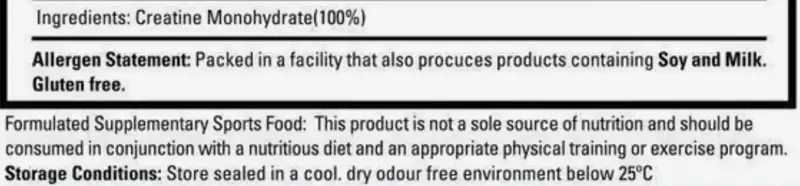
- The ingredients. For a plain creatine powder, you’d expect to see creatine monohydrate and very little else.
- The amount per serve and the daily directions. If it’s sold as a sports food, the Food Standards Code limits creatine to 3 g in a day’s amount. A listed medicine follows TGA rules, so its directions may differ.
- The warning statement. A sports food should say it’s not suitable for children under 15 or pregnant women, and should only be used under medical or dietetic supervision.
- An AUST L number, if it’s a capsule or tablet.
- A batch-testing logo, if you compete in tested sport.
Will creatine make me put on weight?
This is one of the most common worries I hear, and it’s a fair one. Some people notice the scales go up by a kilo or two in the first few weeks. This is mostly water held in the muscles, not fat, and it tends to settle.
If a change on the scales would upset you, it’s worth knowing this before you start, so it doesn’t come as a surprise.
Is creatine safe for women?
Creatine isn’t an essential nutrient, so there’s no Australian daily nutritional target for it. For healthy adults taking the amount on the label, the side effects people mention are usually mild, such as a full or unsettled stomach.
That said, “generally fine” isn’t the same as “right for everyone”. Your own health and the medicines you take matter most.
When to talk to your pharmacist or GP first
- You have a kidney condition, or you’ve been told to keep an eye on your kidney function.
- You take regular medicines, especially any that can affect your kidneys.
- You’re pregnant, trying to fall pregnant, or breastfeeding.
- You’re buying for someone under 15. You may find Has your teenager asked you to buy creatine? helpful.
It’s a quick conversation, and it’s exactly what we’re there for.
What about the big promises online?
You’ll see plenty of posts about creatine for menopause, mood, memory and more. When you’re weighing them up, it’s worth remembering that a friend’s experience may not be yours, and that Australian labels can only make the claims they’re permitted to make.
If something you’ve read has caught your interest, bring it to your pharmacist. We’re always happy to talk it through with you.
Three simple checks you can do today
- Turn the tub around and find out whether it’s a sports food or a listed medicine.
- Check the ingredients list is short, and the daily amount matches the directions.
- If you take other medicines or have any health conditions, check with your pharmacist before you start.
Cassie is a registered pharmacist, a parent and the founder of Clean Green Safe. With a background in Australian supplement regulation across the TGA, FSANZ and NHMRC, she built Clean Green Safe to help people understand what’s really in their supplements, and how it all adds up across everything they take.
How Clean Green Safe can help
Bring your creatine tub and scan it. Clean Green Safe shows whether it’s a sports food or on the TGA register, reads the label warnings and daily amount for you, and gives an independent grade. Add it to My Stack to see it alongside everything else you take.
- STEP 1ScanScan the barcode or enter the AUST L number
- STEP 2CheckWe check it against the TGA register and Australian limits
- STEP 3SeeSee your grade and your daily totals across everything you take
Built by a registered pharmacist · Works in your phone’s browser